
Image of the Hakuna movement
The Mother of Hakuna. Kneeling and embracing.
The Virgin of Hakuna, also called the Mother of the Embrace, has a name that says almost everything. Every detail of the Mother of Hakuna has a reason. The posture. The embrace. The simplicity. The openness. Here we try to explain a little of the story and symbolism behind this image.
The origin
An image born from the charism
Hakuna is a spiritual family—approved in 2017 as a Private Association of the Faithful by the Cardinal Archbishop of Madrid—which Pope Francis has described as a Eucharistic family. Living in the transfiguring power of the Eucharist: that is what gathers us in Holy Hours, what shapes our songs, and what directs our mission.
The charism of Hakuna takes shape in an attitude: living within the paradigm of the embrace, bowed down and kneeling before Christ in the Eucharist, embracing all reality with the immeasurable measure of the cross. We learn exactly that from Mary. Her yes to the Father was not a single punctual act: it is her whole essence, the attitude we want to make our own.
Images help us enter the mystery. The human person is a symbolic being, capable of perceiving transcendence in what is material. We need a place where our gaze can rest again, a place on which to set our lips. That is why we asked the artist María Elisa Rivera to create the sculpture that presides over our Holy Hours and that we call the Mother of Hakuna and Mother of the Embrace.
“Mother, the images we make of you as your children seek a place where our gaze can rest again, a place on which to set our lips. This image, Mother, reminds me of your eternal yes to the Father; of living while embracing Christ, flesh and bread; it reminds me to live on my knees, of the eternal embrace you invite me to enter. Thank you, Mother, because you are always there. May we know, with you, only how to say Yes.”
The work
- Artist
- María Elisa Rivera
- Official name
- Mother of Hakuna · Mother of the Embrace
- Material
- Marble sand and resin
- Posture
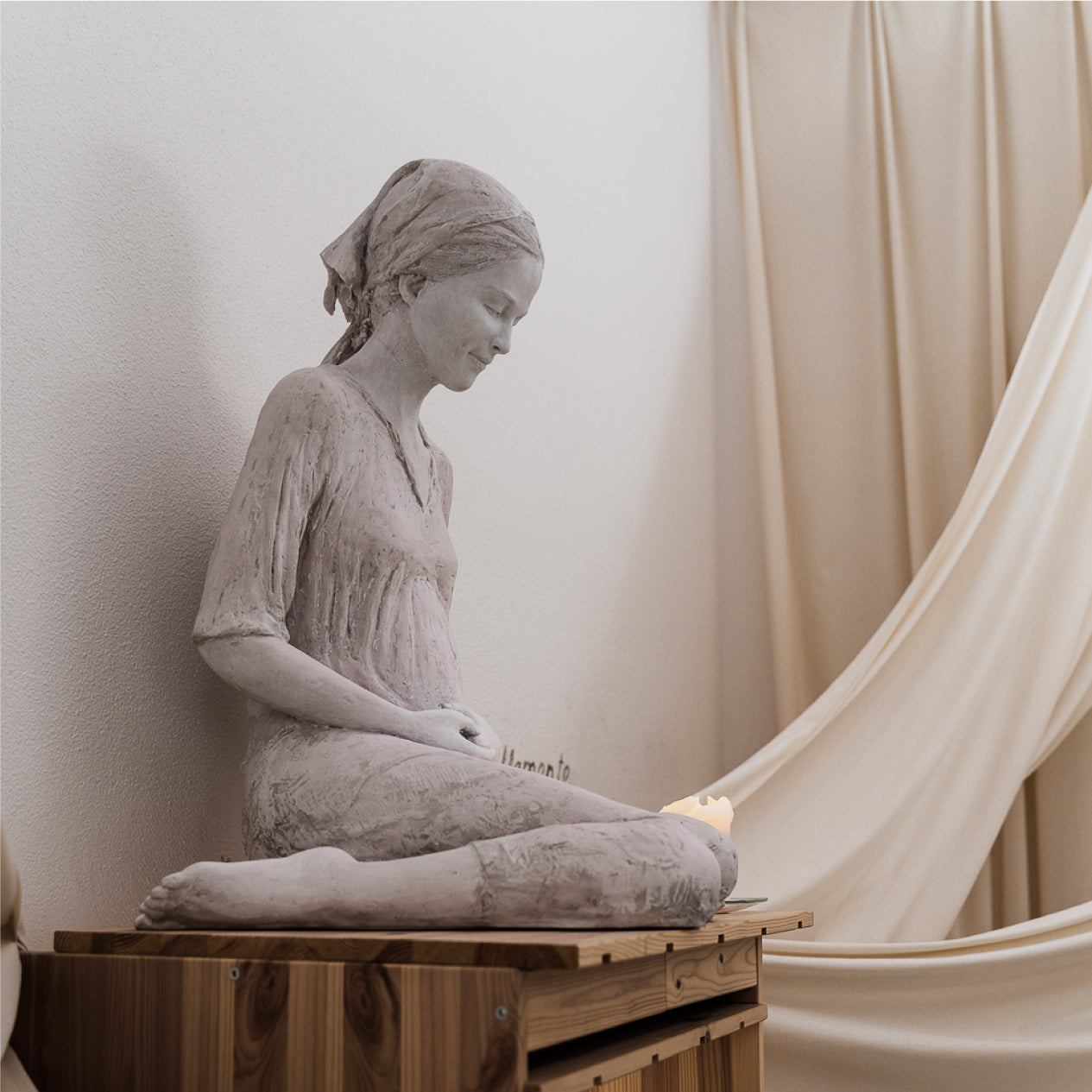
- Kneeling, seated, embracing the womb
- Sizes
- 12 · 21 · 31 · 70 cm
 Hakuna ShopThe Mother of Hakuna sculptureView the collection →
Symbolism
Three words, one image
The whole composition of the Mother of Hakuna can be read through three realities that define Mary and that the sculpture makes visible:
And all three become visible through three attitudes that can be sensed at first glance: Mary’s expectancy, tenderness and humanity.
These three notes are older than the sculpture; they were already alive in other works born from the same charism, through the artist Matoya.
In December 2017, Matoya painted the oil-on-panel work Mother of Hakuna: an image of Mary that already gathered those three keys—humility, simplicity and maternity—and became the community’s visual reference. So much so that the “medalla del pringado”, the medal worn by Hakuna members, carries a bas-relief of this work. It is the original pictorial image from which this iconography springs.
In October 2019, Matoya painted The Embrace: a work that deepens the central gesture of the sculpture—Mary embracing Christ within her—exploring the tenderness, expectancy and humanity of the Mother that María Elisa Rivera would later render in three dimensions.
The 2021 sculpture is, in that sense, the culmination of a journey: what was first paint took material form and culminated as a sculptural work.
Humility
Greatness lies in the yes
In Hakuna we understand that Mary’s greatness lies in her yes. Not in one particular act of her life, but in her deepest essence: Mary was called into existence by God for that act. Her yes is perfect, without cracks, complete and free. And when there is such a yes, the Thou comes before the I, and what was hers becomes Yours.
Her greatness is completely bound to her humility. In surrender she receives her mission. The Mother of Hakuna expresses this in her posture: kneeling, gathered inward, receiving the greatest yes in human history. Everything in her points inward, to what she carries, to Him.
Simplicity
It is not plainness. It is unity.
Simplicity is not the same as mere plainness. What is simple is not what lacks something, but what possesses unity: there is no rupture, no fissure; it is coherent with its own being.
Mary’s yes is simple in that sense: one, complete, without contradiction. And the form of the sculpture expresses this in its composition. Everything redirects toward Christ: not toward Mary’s face, not toward the details of her clothes or other elements, but toward the center, the embrace, the womb where He lives. Mary recedes a little so that He may appear. That is simplicity. That is being Christ-centred.
Simplicity, within the charism of Hakuna, is a conviction: the life-giving action of God ordinarily happens in simple ways, in real and concrete life, without artifice. The Mother of Hakuna reflects that in every line.
Maternity
The first tabernacle in history
Why is the Virgin of Hakuna pregnant?
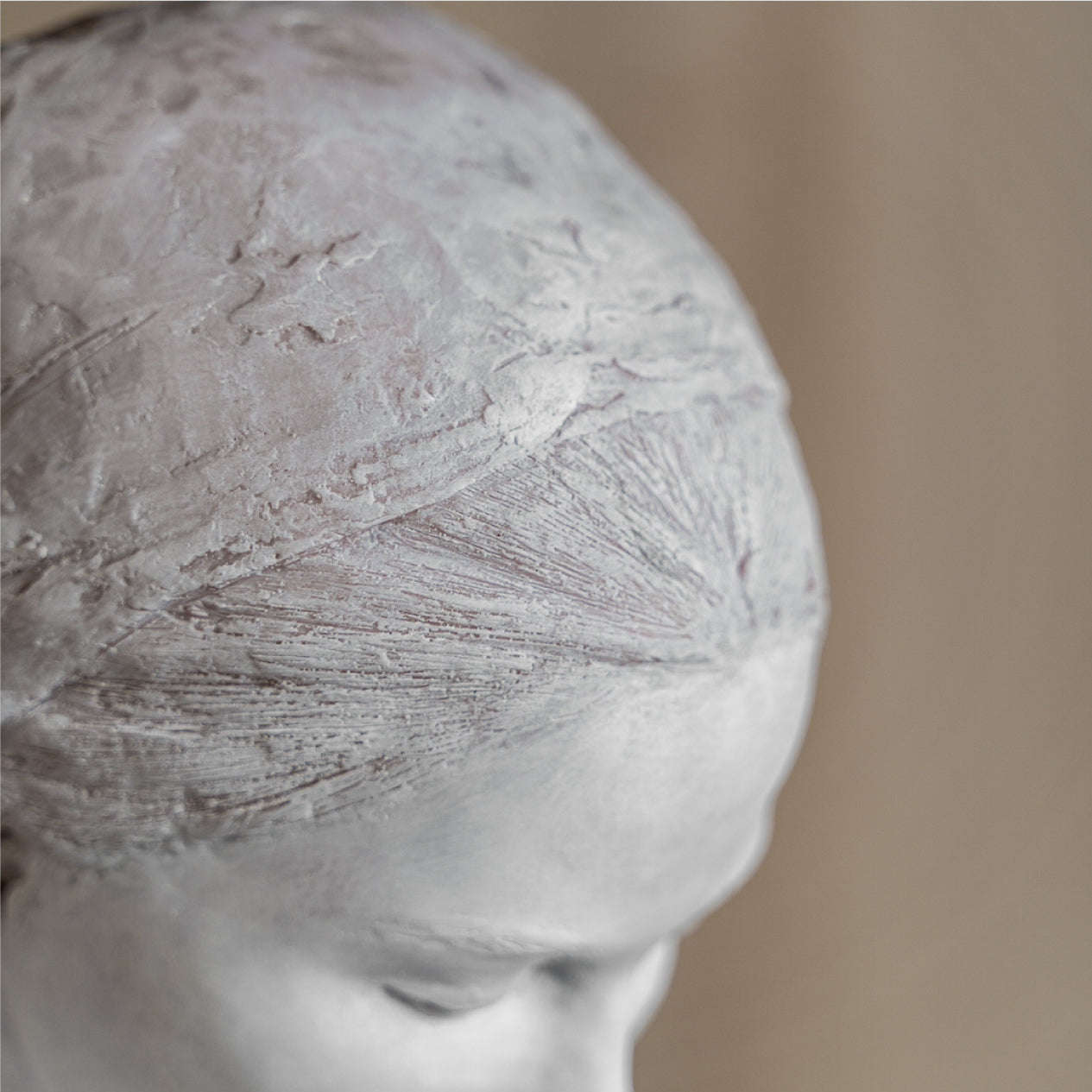
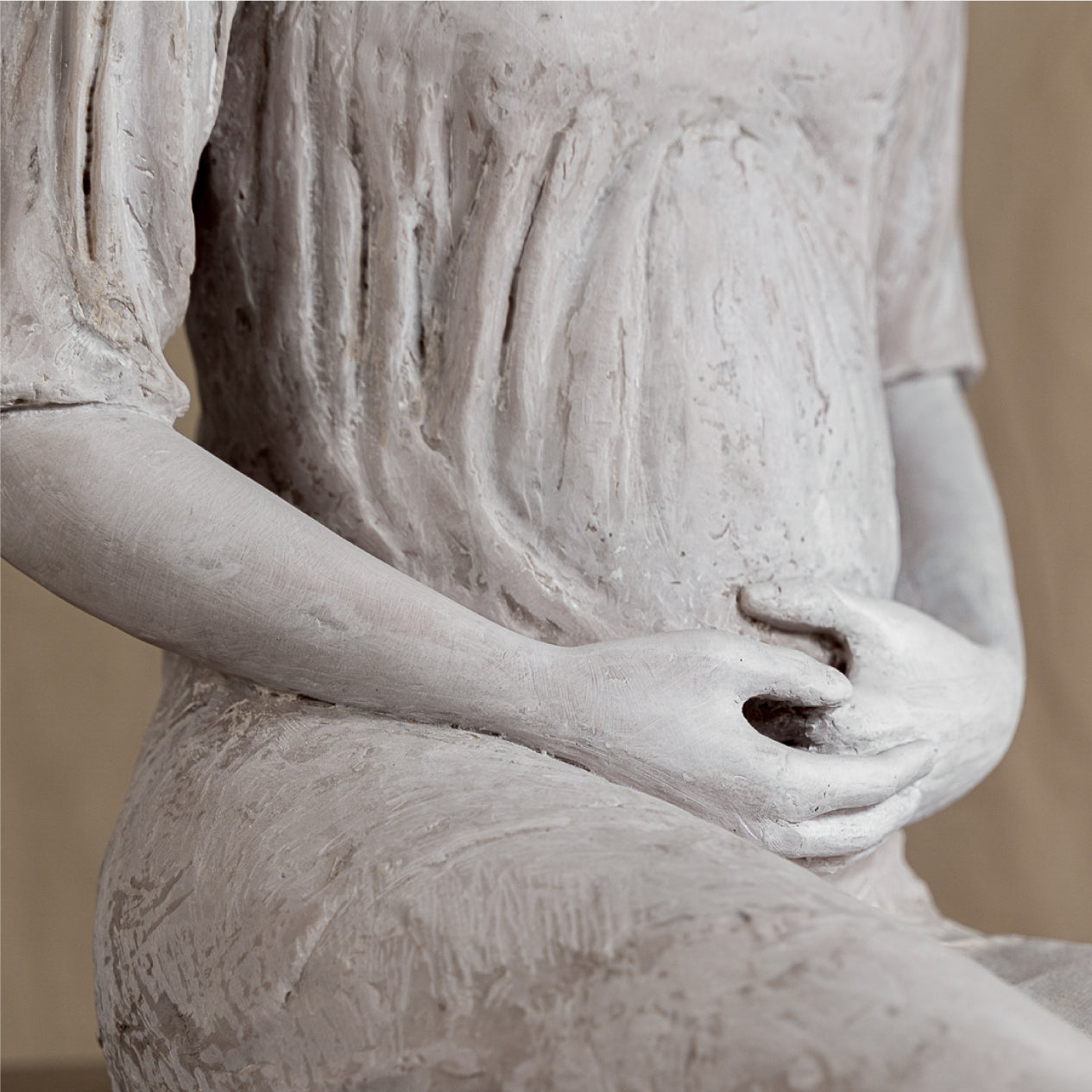
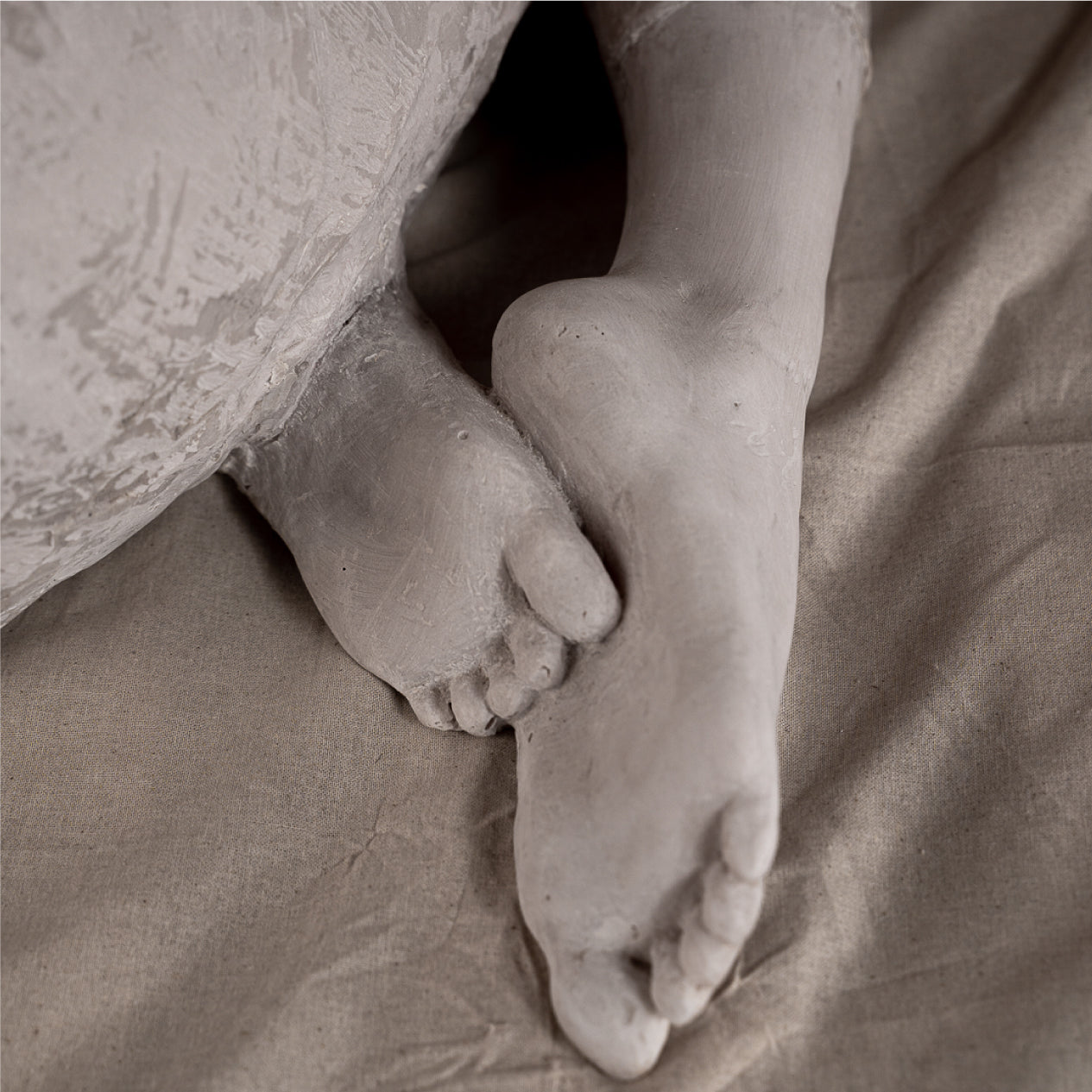
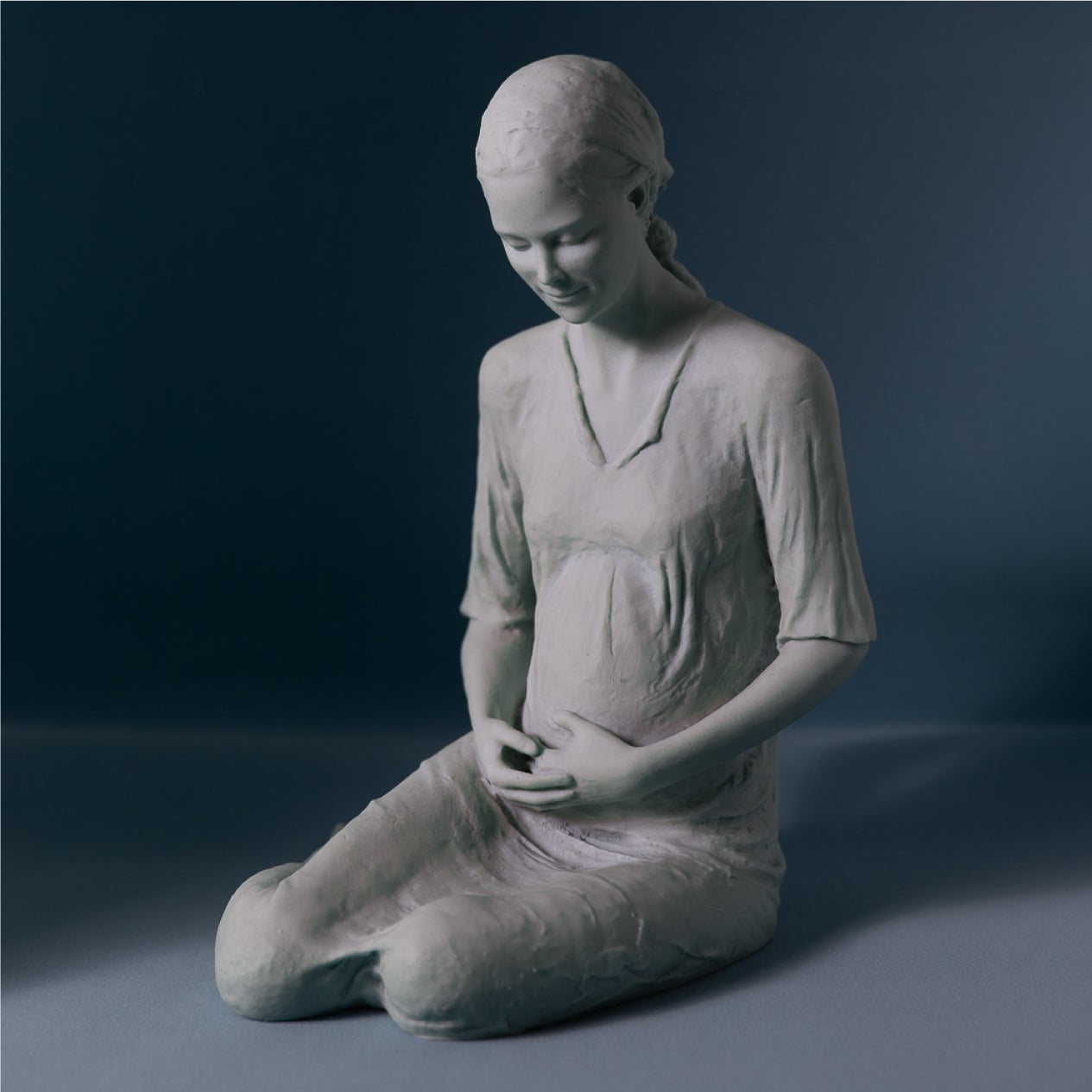
Mary is pregnant. She carries Christ within. Seated on her heels, with hands wrapping her womb, in silence, in expectation, in prayer.
It is the most concrete image of what the Incarnation means: God became flesh, and that flesh was hers. Mary is the first tabernacle, the place where the Word dwelt for the first time among men. The Eucharist we adore in Holy Hours is the same Presence she carried within her.
That is why the embrace is not only tenderness, though it is that as well. It is the attitude of someone who guards something infinite with all the delicacy of a human body. It is the serene expectancy of someone who has said yes and now receives what that yes has brought.
“Take care of this movement, always staying close to Jesus in the Host, who is the one who makes you a community and makes you cry out to today’s world.”
Pope Francis · Message to Hakuna · Rome, 2019
Kneeling
The posture that says it all
The kneeling posture is not an aesthetic detail. It is the heart of the Hakuna charism.
Hakuna is born prostrate and kneeling in the midst of the world, soaking in the Life that flows from the glorious body of Christ, that is, from the Eucharist. To live kneeling, embraced and embracing: that is our beloved beatitude, the beatitude of the poor in spirit.
Mary kneeling teaches us that this gesture is not defeat, but the freest posture there is. Nobody forces you. You choose it. And when you do, something within you recognizes that there is someone greater. From that kneeling yes, life is born.
The artist
María Elisa Rivera
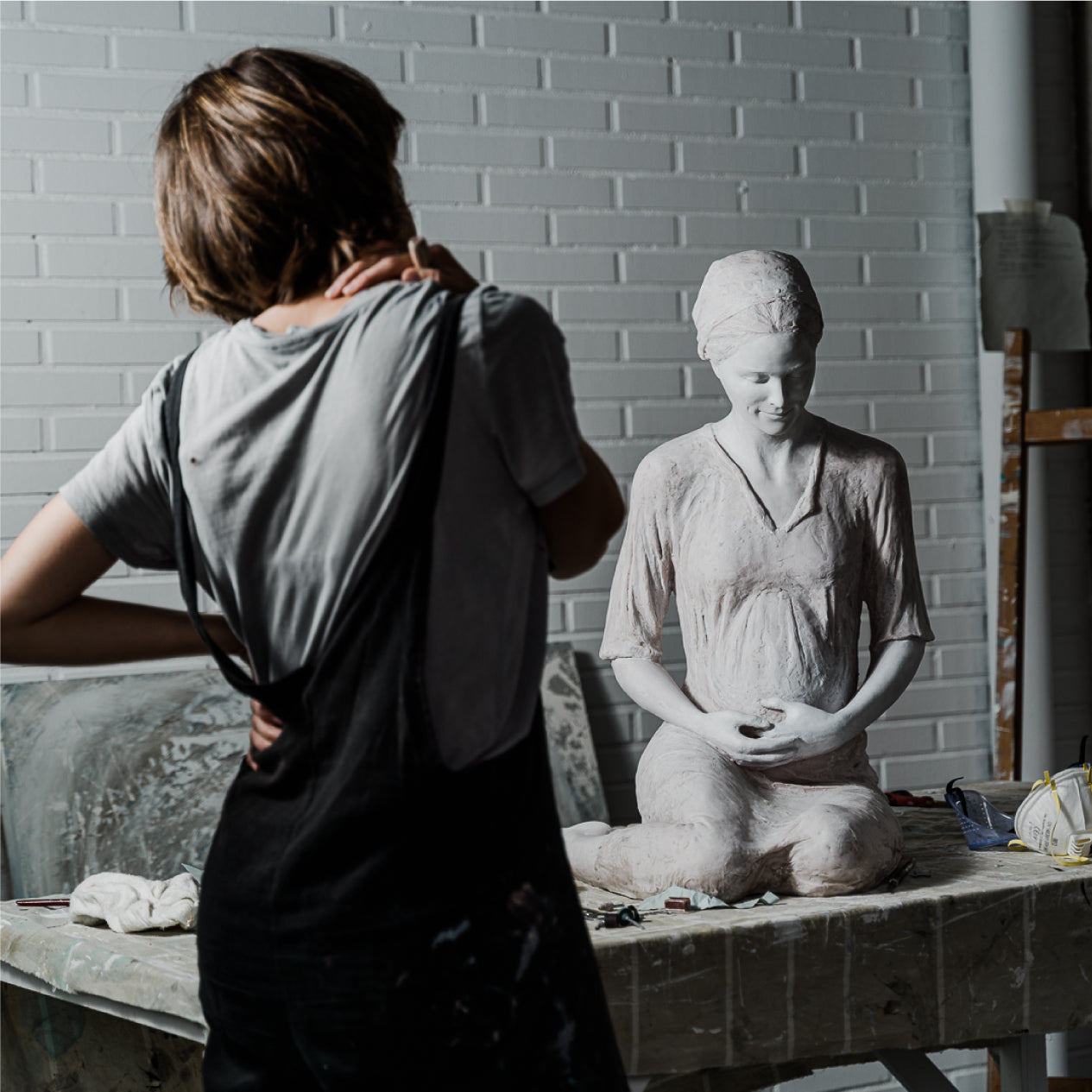
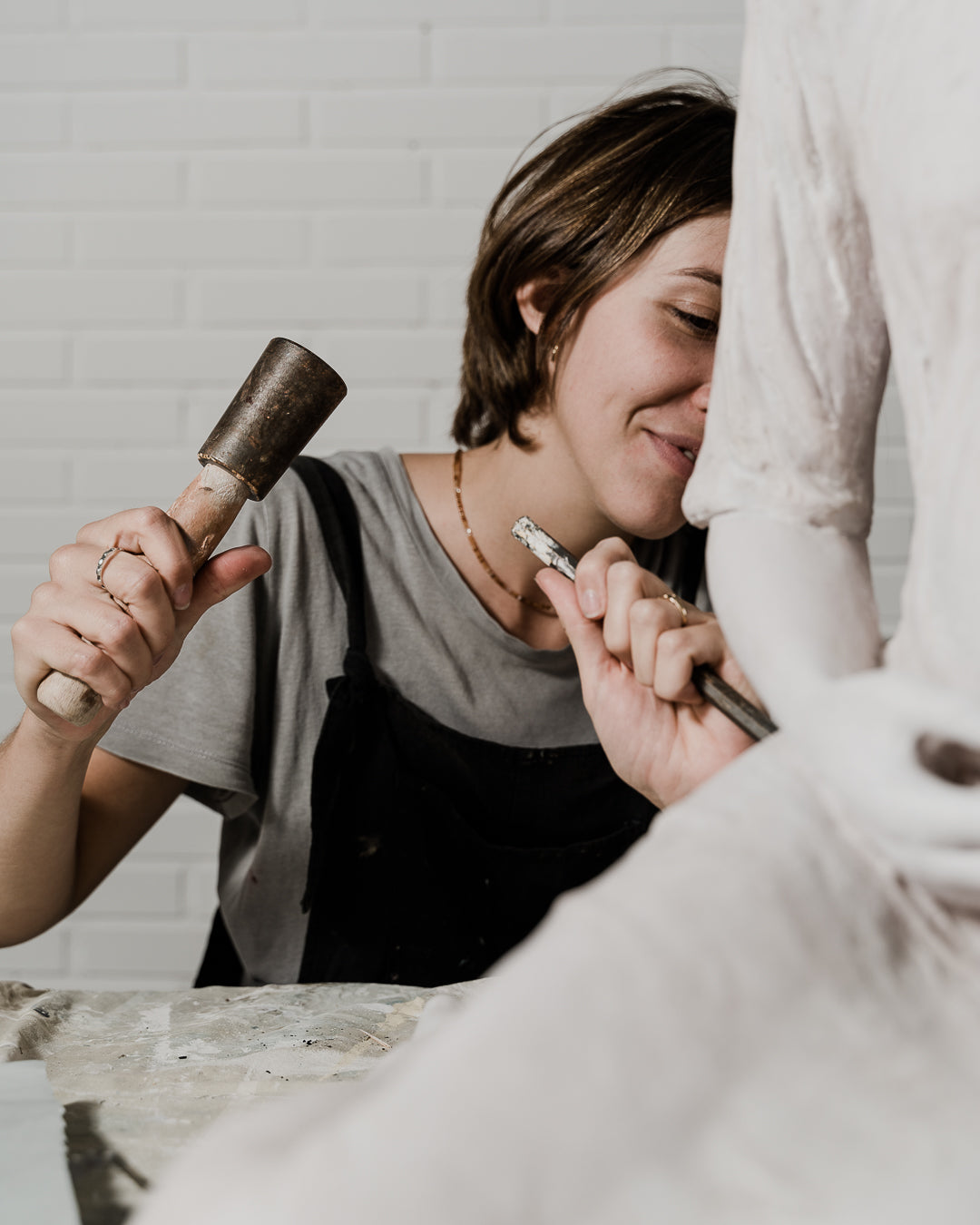
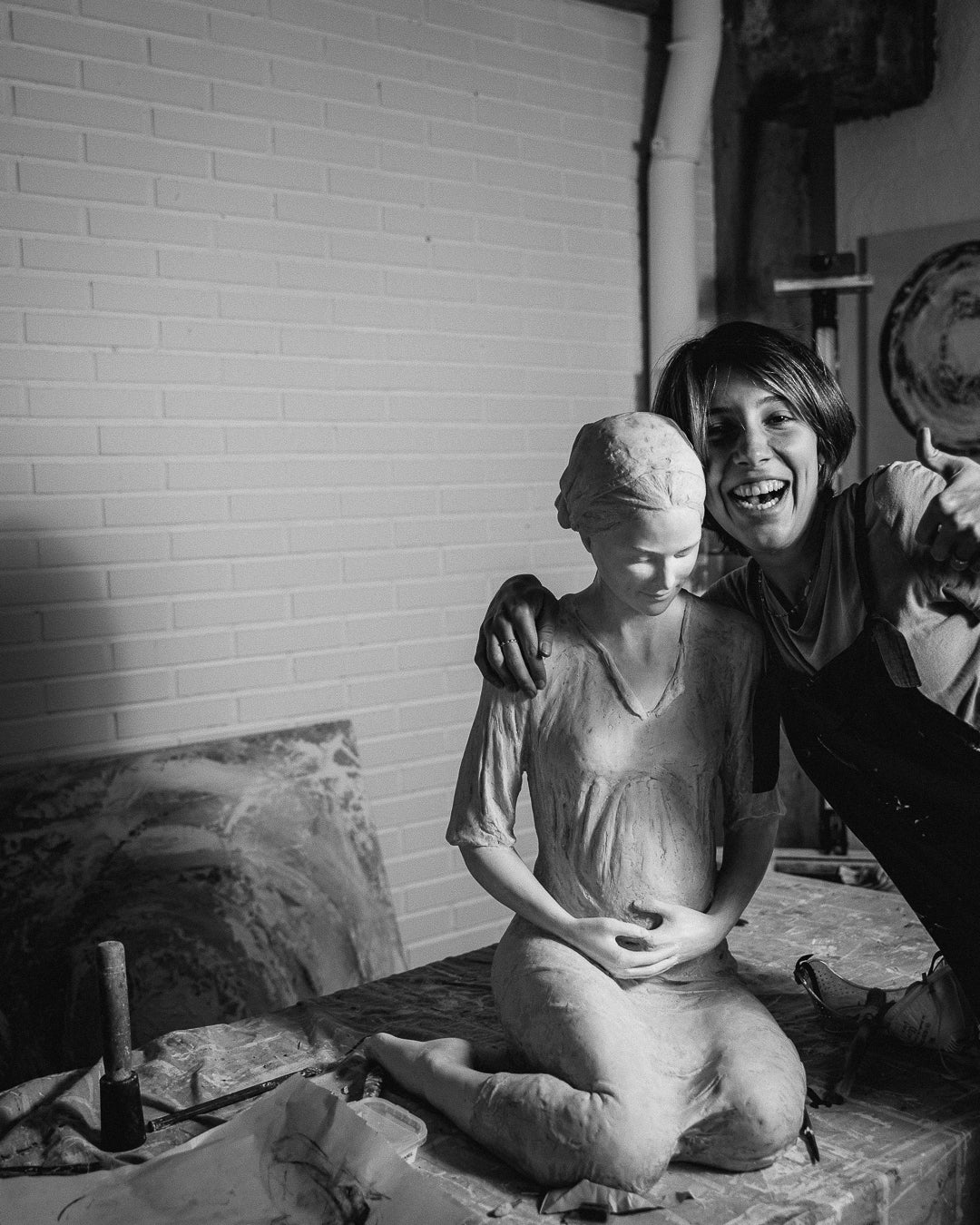
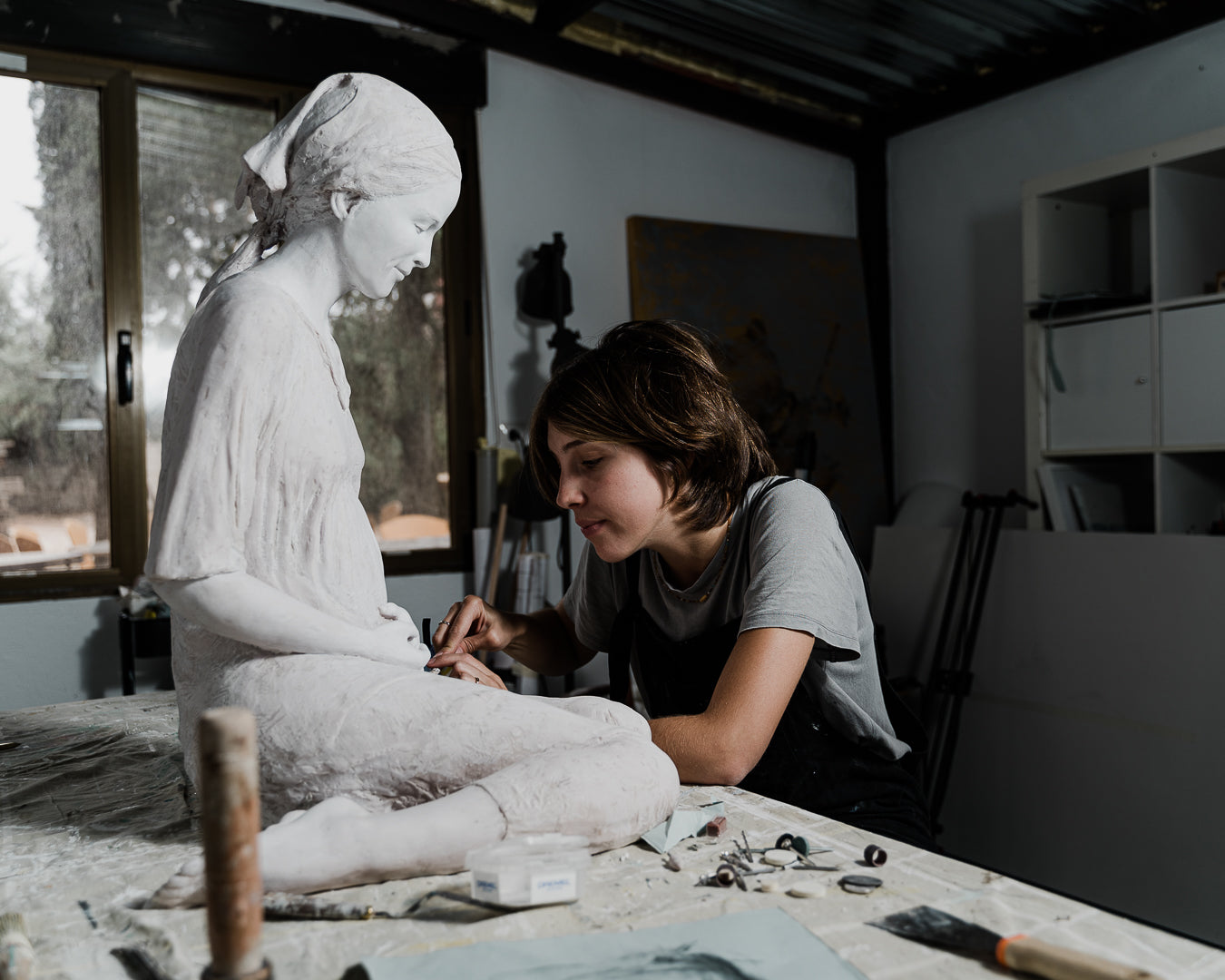
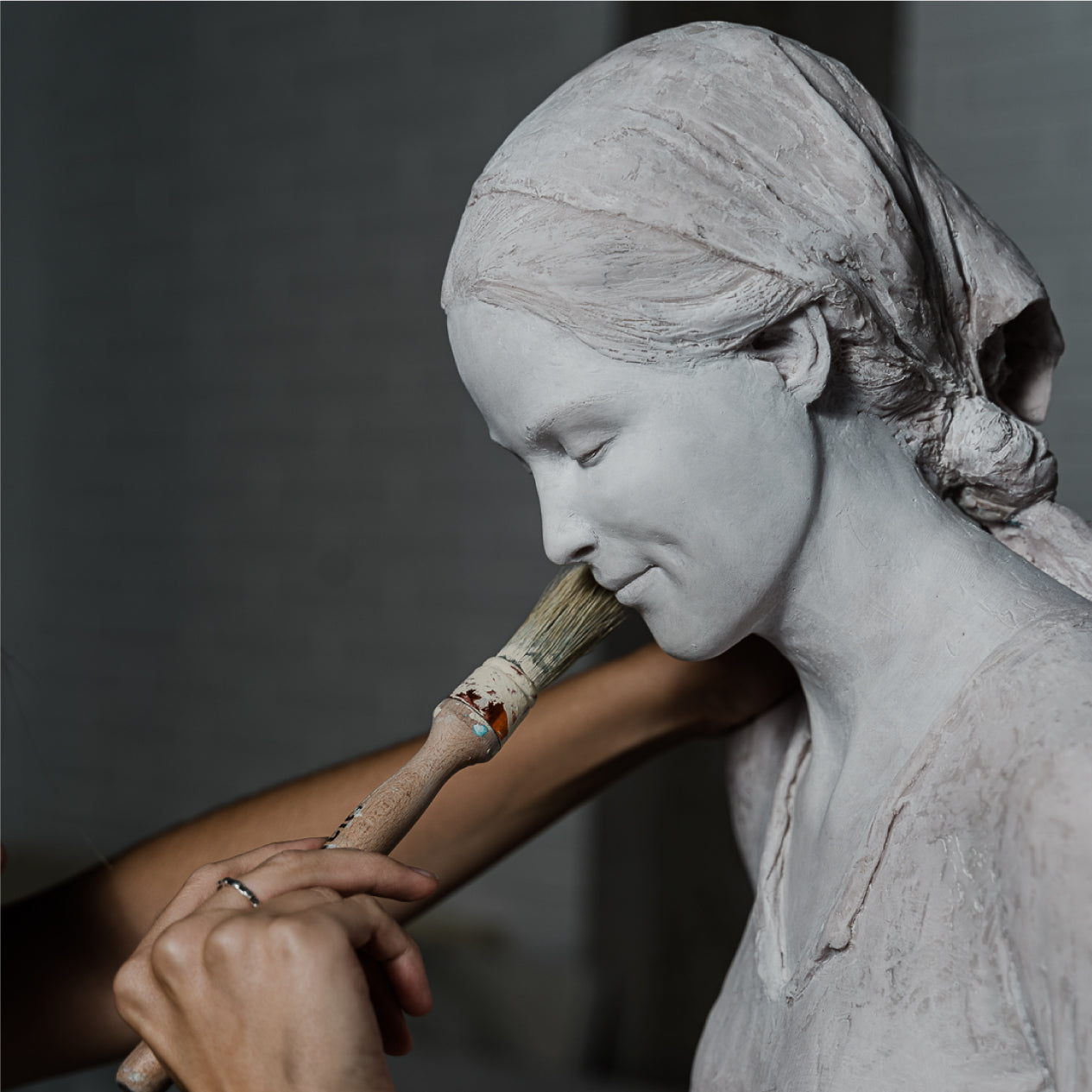
María Elisa Rivera during the creation process of the Mother of Hakuna.
The Mother of Hakuna was designed by María Elisa Rivera, an artist from Madrid with a degree in Fine Arts from the Complutense University of Madrid and a Master’s degree in Humanities from Universidad Francisco de Vitoria. Her work includes painting, sculpture and drawing, with a sensitivity that joins classical technical training to a deep reflection on beauty and transcendence. She has been recognised in competitions such as the Four Seasons Madrid visual arts contest—on two consecutive occasions—and the PROArte Prosol Prize for young artists.
Hakuna’s commission arrived in 2021. Rivera worked with full freedom: a path of sketches, live models and successive refinements in search of the image that could make visible what the community lives. The result is this sculpture in marble sand and resin: a young woman, with human and approachable features, a slight smile, kneeling, embracing what she carries within.
The sizes
The Mother of Hakuna in your home
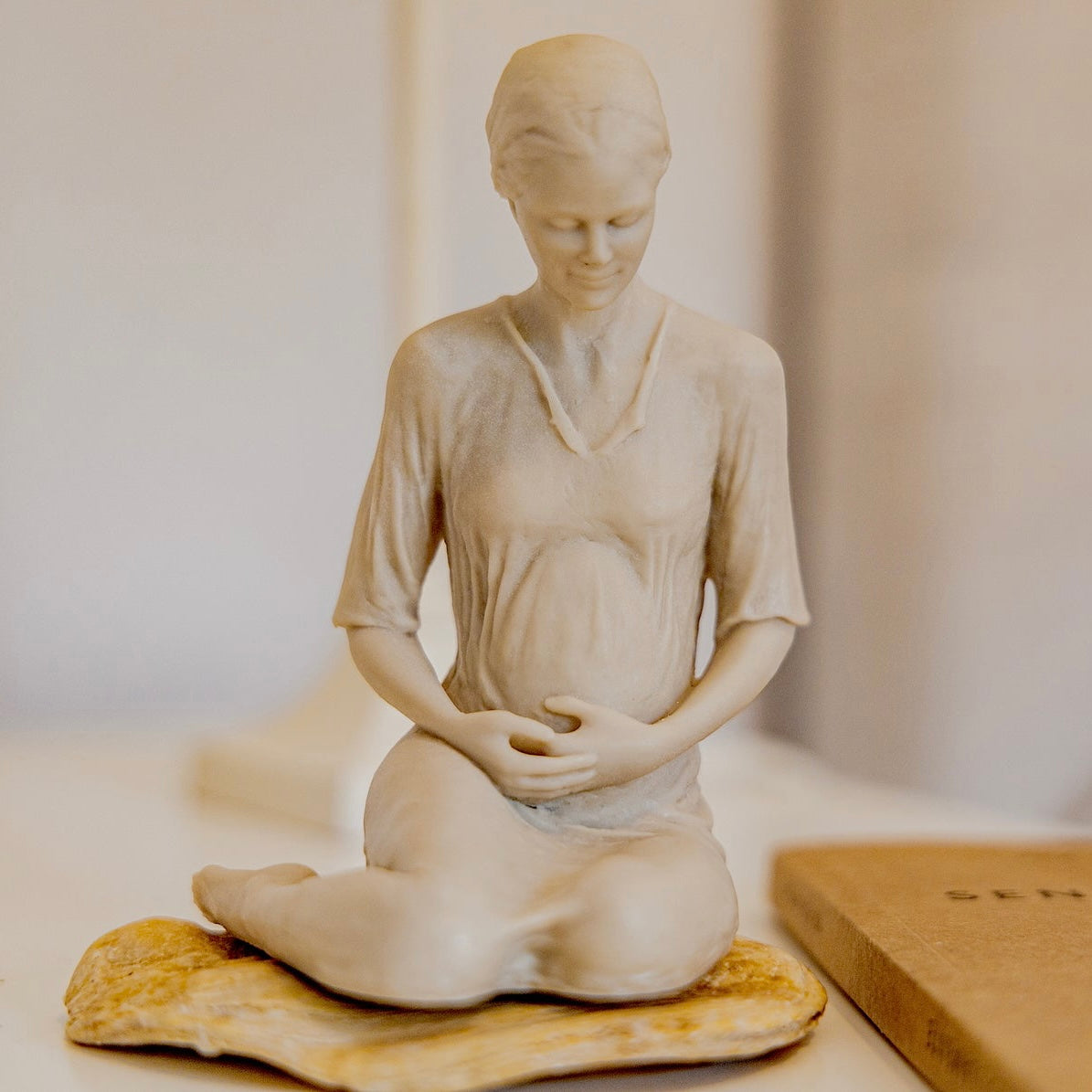
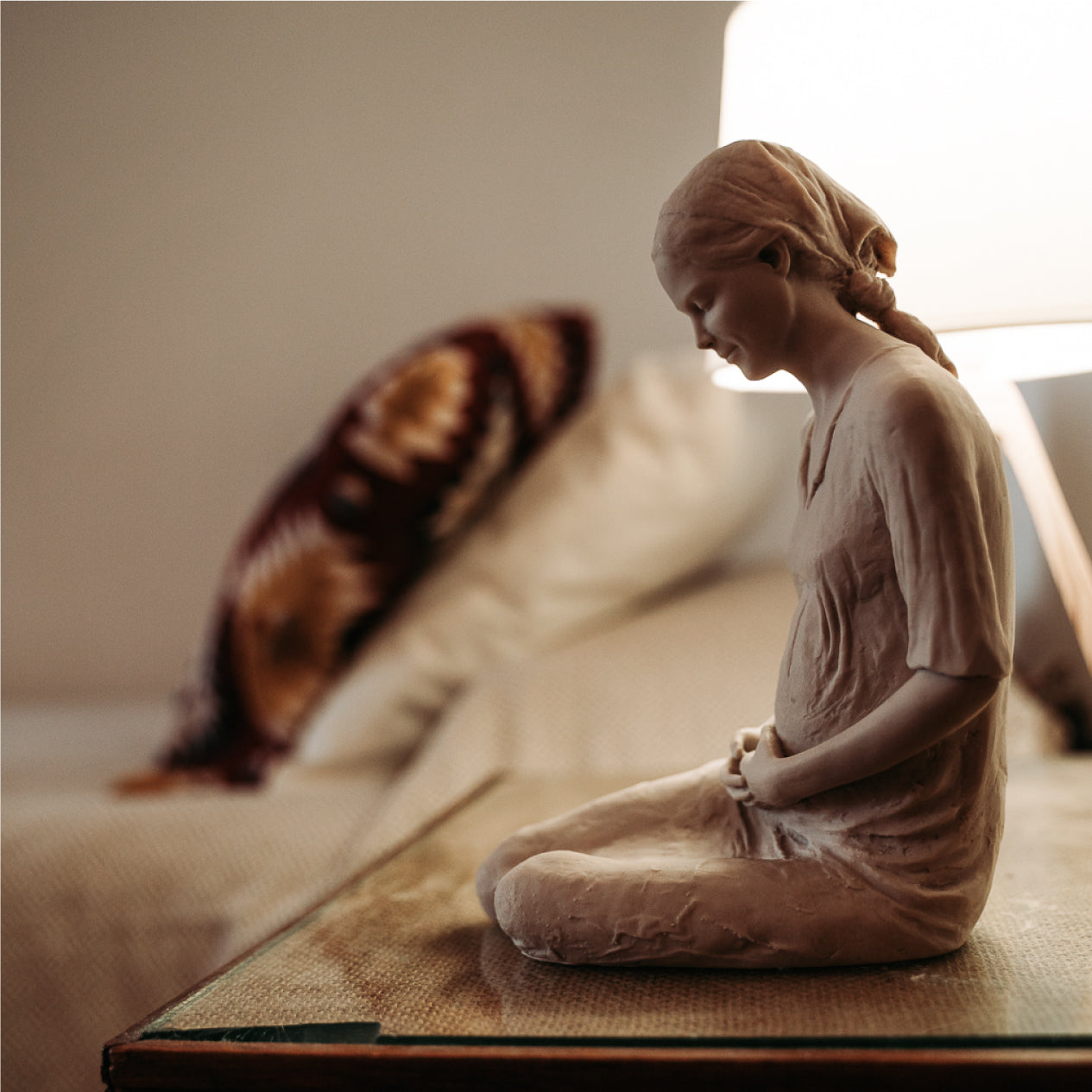
Available in four sizes, all in marble sand, with a silk-screened padded gift box included.
24-hour delivery to mainland Spain. For the rest of the world, DHL Express with tracking. For parish or group orders, write to shop@hakuna.org.
FAQ
What people usually ask us
Is the Mother of Hakuna the same as the Virgin of Hakuna?
Yes. They are two names for the same sculpture designed by María Elisa Rivera. “Virgin of Hakuna” is what people commonly call it. “Mother of Hakuna” or “Mother of the Embrace” is its official name.
Why is she kneeling?
Because Hakuna learns from Mary how to live kneeling before the Eucharist. The kneeling posture is the central gesture of the charism: adoration, surrender and humility. Mary kneeling teaches us how to live, not only how to pray.
Why is she pregnant?
Because she carries Christ within. Mary is the first tabernacle in history, the place where God became man for the first time. The sculpture represents that moment: the embrace of the womb, the serene waiting, God made flesh in a woman who said yes.
Are there other sculptures with this name?
With the name “Mother of Hakuna” or “Virgin of Hakuna”, no. There is a sculpture called “Our Lady of Hakuna”, by the sculptor Javier Viver, which was commissioned by us and is no longer sold. The Mother of Hakuna sold at Hakuna Shop is the one by María Elisa Rivera.
What sizes is it available in?
In four sizes: 12 cm (€75), 21 cm (€195), 31 cm (€295) and 70 cm (from €2,800). All are made in marble sand, include a gift box and have 24h delivery within Spain.
Can I place an order for my parish or group?
Of course. Write to shop@hakuna.org and we will help you. For the 70 cm size, the delivery time is approximately six weeks.
